9 Species on Every Hurghada Dive Photographer’s Bucket List
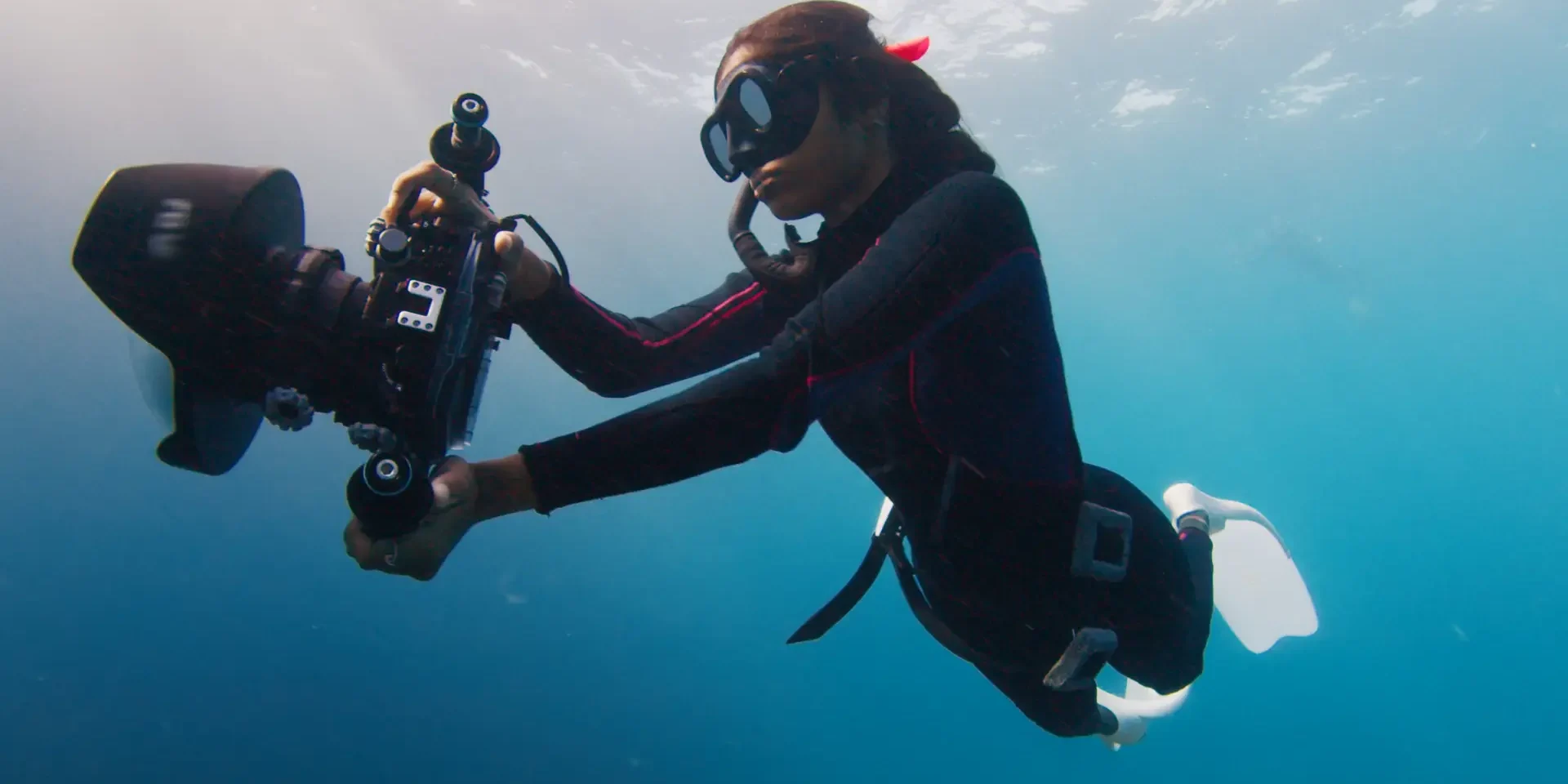
For underwater photographers, the Red Sea isn’t just a dive destination—it’s a world-class studio. The combination of year-round sunshine, spectacular visibility, and endemic species provides the perfect stage for creating award-winning shots. Yet, the challenge isn’t finding subjects; it’s choosing which ones to prioritize.
A great underwater photo is born from patience, preparation, and knowing exactly where and how to look. The creatures that top every Hurghada photographer’s list are often the ones that require the most skill and the best conditions to capture.
At Scubadore Hurghada, our expert guides are naturalists with an eye for photography. We understand that finding the subject is only half the battle—you need the time, the stable conditions, and the minimal disturbance of a small group to truly capture the shot.
Here are the 9 coveted marine species that define the underwater photographer’s trophy case in the clear, vibrant waters of Hurghada.
The Big Three: Wide Angle Wonders
These subjects demand a wide-angle lens and a careful approach to capture their size, grace, and presence against the deep blue.

The Green Sea Turtle (Chelonia mydas)
- Why it Tops the List: Nothing conveys peace and grace like a large Green Sea Turtle gliding effortlessly through the water or grazing serenely on a seagrass meadow. They are ancient, majestic, and instantly recognizable.
- The Photo Challenge: Shooting upward to capture the turtle silhouetted against the sun’s rays, highlighting its shape and the surrounding blue water. Requires excellent buoyancy to avoid kicking up silt from the sand below.

The Napoleon Wrasse (Cheilinus undulatus)
- Why it Tops the List: With its distinctive bulbous forehead (nuchal hump), massive size, and curious, intelligent eyes, the Napoleon Wrasse is the friendly giant of the reef. Its immense scale makes for a stunning wide-angle portrait.
- The Photo Challenge: They are often curious and come close, requiring quick adjustment of strobes or light to avoid overexposing the shot. Capturing their sheer size against the scale of the coral is key.
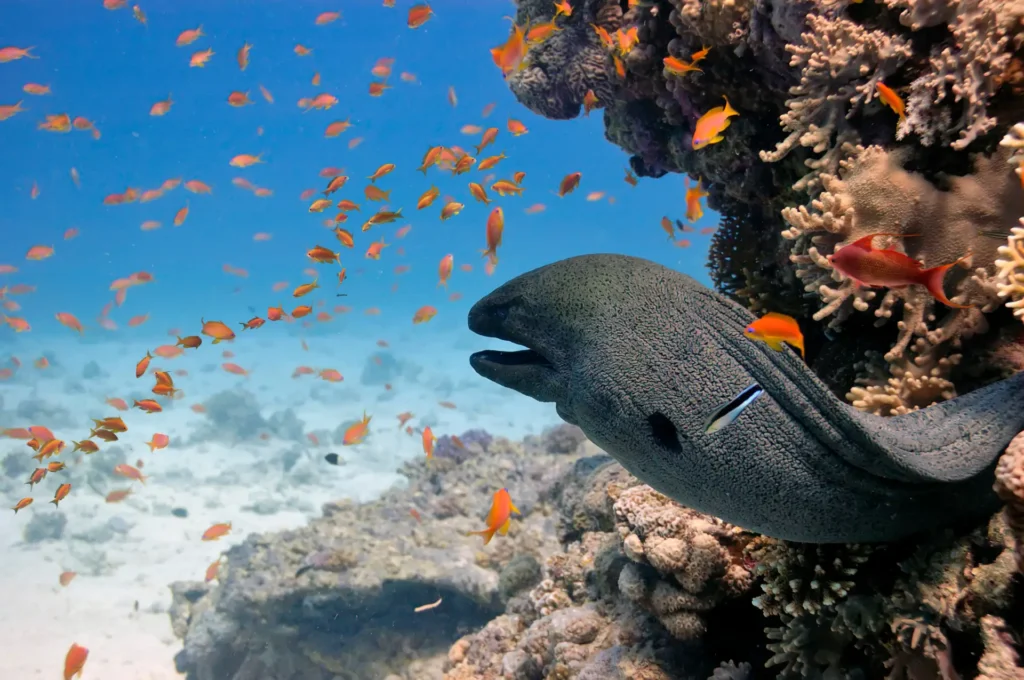
The Giant Moray Eel (Gymnothorax javanicus)
- Why it Tops the List: The Moray offers drama. A portrait of a large Giant Moray (up to 3 meters long), head extended from a dark crevice, mouth slightly agape (breathing!), provides a striking, high-contrast, and powerful image.
- The Photo Challenge: Getting the light into the dark crevice without creating heavy backscatter in the foreground. Often requires a focus light on its eye to bring out the detail in its patterned skin.
The Kings of Colour: Mid-Range Magic
These mid-sized fish are essential for capturing the vibrant colour palette of the Red Sea.

The Red Sea Clownfish (Amphiprion bicinctus)
- Why it Tops the List: The Red Sea’s version of ‘Nemo’ is a perennial favourite. Its bright orange and white bars are striking against the contrasting purple and green tentacles of its host anemone. It’s a classic example of symbiosis.
- The Photo Challenge: The anemone tentacles sway constantly, making focus tricky. You need a fast shutter speed and precise focus on the clownfish’s eye to get a sharp portrait amidst the movement.

The Emperor Angelfish (Pomacanthus imperator)
- Why it Tops the List: As an adult, this fish is a masterpiece of design—a rich blue body patterned with fine yellow horizontal lines, a yellow tail, and a dark mask over its eyes. It’s pure, photogenic royalty.
- The Photo Challenge: Angelfish are constantly moving and often shy. You need patience and a quick trigger finger to catch one pausing for a brief moment as it grazes on a sponge or algae patch.

The Red Sea Bannerfish (Heniochus intermedius)
- Why it Tops the List: These fish are photogenic due to their dramatic, elongated white dorsal fin that streams behind them like a pennant (a “banner”). They often swim in schools, creating a stunning visual pattern against the deep blue.
- The Photo Challenge: Capturing a group of them swimming in formation. Their contrast of black, yellow, and white is challenging—too much light can blow out the white, while too little leaves the black details muddy.
The Masters of Macro: Patience and Precision
These elusive subjects require a macro lens, incredible patience, and a willingness to stay perfectly still.

The Reef Octopus (Octopus cyanea)
- Why it Tops the List: The ultimate prize. The challenge lies in finding this intelligent creature and then capturing its instantaneous camouflage changes, its texture transformations, or its curious, focused gaze.
- The Photo Challenge: You must find it first! If it’s active, it’s constantly moving. If it’s resting, it’s virtually invisible. Requires a fast reaction time to capture a behavioural shot (like pouncing on prey) before it vanishes.

The Spanish Dancer Nudibranch (Hexabranchus sanguineus)
- Why it Tops the List: At up to 40cm long, this is the largest and most dramatic nudibranch in the world. Its brilliant, flowing red-and-white body provides a stunning contrast underwater.
- The Photo Challenge: While large, they are rare. The ultimate photo is catching one swimming, unfurling its entire body in its mesmerizing, ribbon-like “dance.” This requires deep macro knowledge and being prepared for the moment.

The Crocodilefish (Papilloculiceps longiceps)
- Why it Tops the List: Its wide, flat head, reptile-like patterned skin, and amazing camouflaged eyes (complete with ornamental lappets) make it an alien portrait subject.
- The Photo Challenge: They are nearly invisible, resting motionless on the sand. You need to use a focused torch to reveal its pattern and get the lens extremely low to the sand, without disturbing the environment.
The Scubadore Advantage: Your Secret Weapon for the Perfect Shot
The key to capturing any subject on this list is not just expensive gear; it’s the right environment and the right team.
- Patience is a Must: Finding the Stonefish or waiting for the Octopus to emerge takes time. Our small-group, slow-pace dives give you the time needed to hover and wait for the perfect moment without the pressure of a large group rushing you along.
- Zero Silt, Clear Backgrounds: U/W photography is destroyed by backscatter (light reflecting off kicked-up particles). Our strict focus on buoyancy control and minimal divers ensures the water remains pristine and clear, giving you clean, professional-looking backgrounds.
- Expert Critter-Spotting: Our guides are naturalists who know the exact location and behaviour of these unique species. We find the subject, so you can focus 100% on the art of composition, lighting, and focus.
If you’re ready to upgrade your underwater photography portfolio, Hurghada provides the trophy subjects, and Scubadore provides the perfect environment to capture them.