The Living Jewels of the Red Sea: A Diver’s Guide to Understanding and Protecting Our Coral Reefs
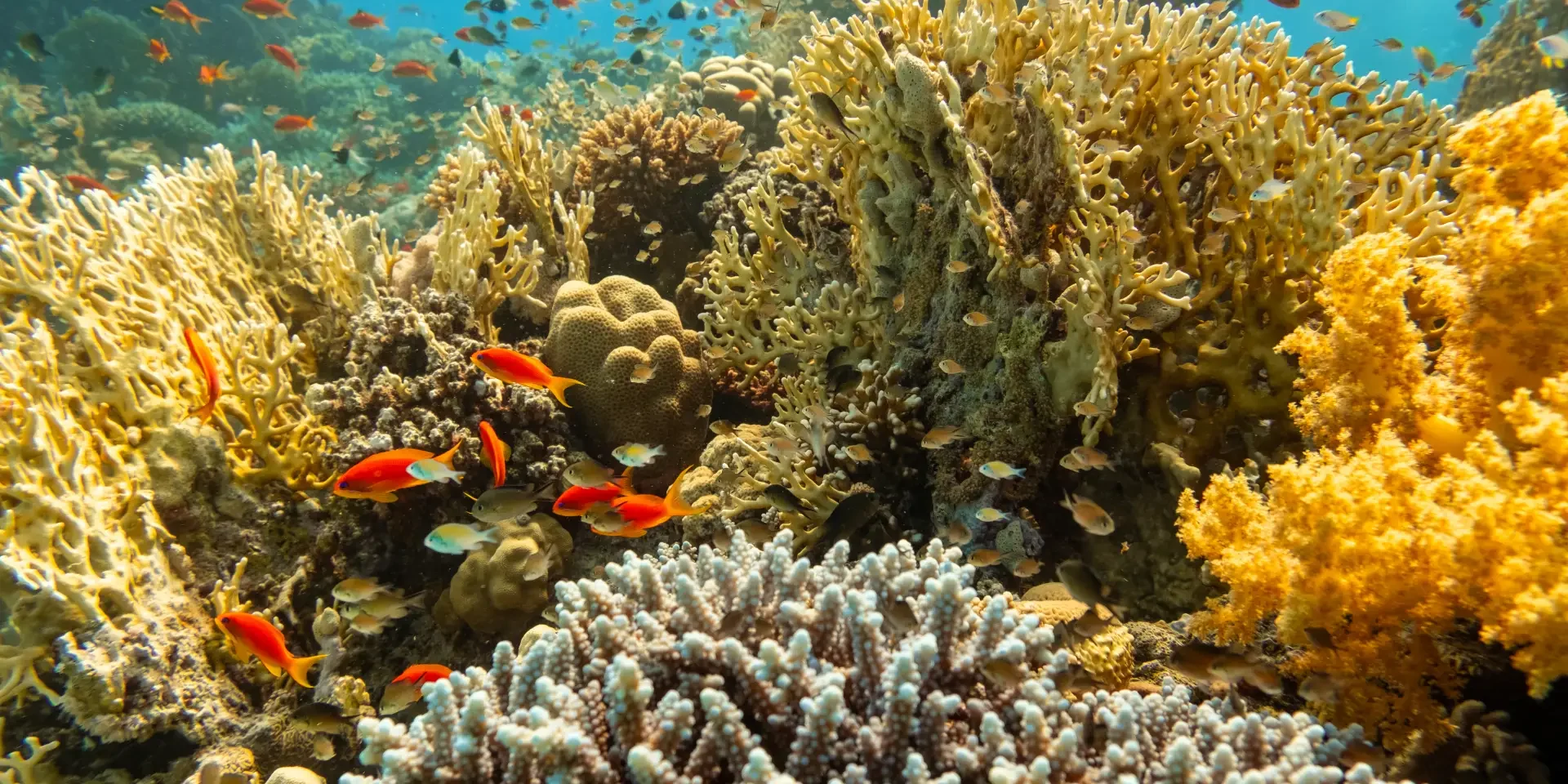
When we descend into the warm, blue waters of the Red Sea, we enter one of the most breathtaking ecosystems on Earth. It’s a world of vibrant colour, intricate architecture, and a dizzying diversity of life. The architects and artists of this world are the corals, and the structures they build are the reefs—bustling underwater cities that are the heart and soul of the ocean.
Here at Scubadore Hurghada, we consider it a profound privilege to guide our guests through these magnificent living landscapes every day. We also believe that with this privilege comes a great responsibility. The future of these precious reefs is in the hands of those who love them most: the scuba diving community.
This guide is a closer look at what makes the Red Sea’s reefs so unique and a pledge to the simple, crucial actions we can all take to ensure their survival for generations to come.
The Red Sea’s Underwater Metropolis: A Uniquely Resilient World
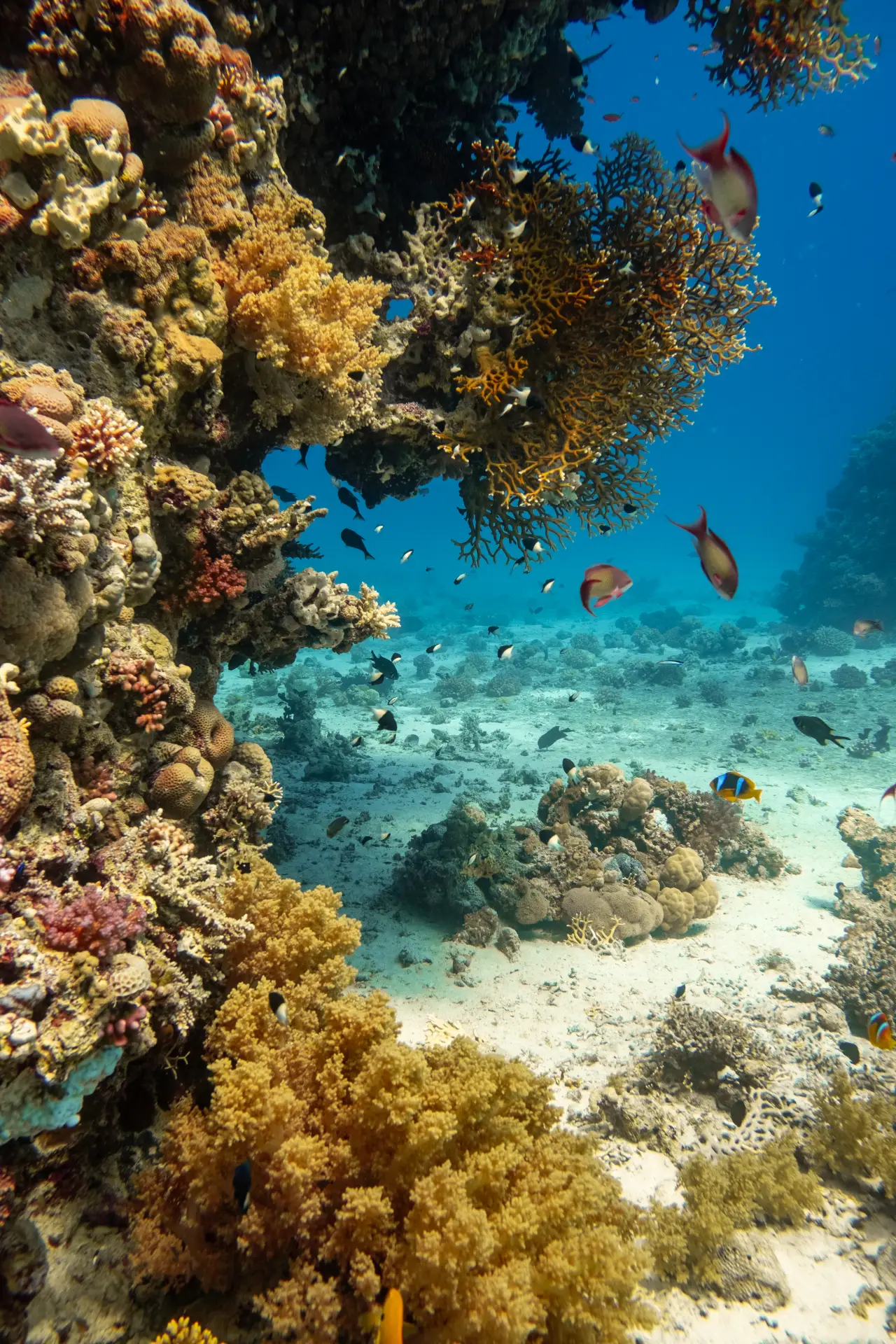 Not all coral reefs are created equal. The reefs of the Red Sea are particularly special, having evolved in a unique environment of high salinity and temperature fluctuations. This has gifted them with a remarkable natural resilience, making them some of the most robust coral ecosystems in the world and a beacon of hope for the future of our oceans.
When you dive with us, you are not just swimming over rocks; you are exploring a living, breathing city built by tiny animals called coral polyps over thousands of years. We can think of them in two main groups:
1. The Architects: Hard Corals These are the master builders of the reef. They create a hard limestone skeleton that forms the very structure of the underwater city. As you drift over the reef, you’ll see their incredible diversity:
- Table Corals (Acropora): Spreading out in wide, flat plates to capture the maximum amount of sunlight, resembling giant underwater tables.
- Brain Corals (Platygyra): Forming massive, grooved spheres that look just like a human brain.
- Branching & Staghorn Corals: Creating complex, tree-like thickets that provide essential shelter for thousands of juvenile fish and small creatures.
2. The Artists: Soft Corals If hard corals are the buildings, soft corals are the city’s vibrant decorations, gardens, and tapestries. They do not build the reef’s foundation but provide its spectacular colour and movement.
- Gorgonian Sea Fans: Delicate, intricate fans that orient themselves to the current to catch passing plankton.
- Leather Corals (Sarcophyton): Fleshy, mushroom-shaped corals that add texture and form to the landscape.
- “Broccoli” Coral (Lithophyton): A beautiful, tree-like soft coral that pulses rhythmically, one of the most mesmerizing sights on a calm reef.
This intricate metropolis provides food and shelter for hundreds of species of fish, crustaceans, and molluscs, creating the dazzling biodiversity that makes Hurghada a world-class diving destination.
Our Collective Responsibility: A Guide to Reef-Friendly Diving
Every time we enter the water, we become visitors in this delicate world. How we behave as guests determines the future health of the reef. Here are the essential practices we champion at Scubadore Hurghada, turning every diver into a guardian of the sea.
1. Master Your Buoyancy, Master Reef Protection
This is the single most important skill a diver can possess. Perfecting your buoyancy control allows you to float effortlessly, like an astronaut in space, observing the reef without ever making contact. A stray fin kick or a dangling gauge can break off decades of fragile coral growth in a single second. Our commitment to small groups means we can take the time to help you fine-tune your weighting and trim, and we highly recommend the PADI Peak Performance Buoyancy specialty course to truly master this art.
2. Adopt a “Hands-Off” Policy
The golden rule of diving is simple: look, but never, ever touch. Corals are covered in a thin, protective layer of mucus that shields them from infection. Even a gentle touch from a finger can scrape this layer away, leaving the coral vulnerable to disease. This rule extends to all marine life. Chasing or touching animals causes them stress and disrupts their natural behaviours.
3. Streamline Your Equipment
Before every dive, take a moment to secure your gear. Your octopus (alternate air source) and your pressure gauge should be clipped securely to your BCD, not dangling below you where they can drag across the reef and cause damage. A streamlined profile is the mark of a thoughtful, experienced diver.
4. Choose a Responsible Dive Operator
Your choice of dive center has a direct impact on the local environment. A responsible operator is a steward of the sea. At Scubadore Hurghada, our conservation ethic is at the core of everything we do:
- Small Groups: Fewer divers in the water at one time means significantly less accidental impact on the reef and a more controlled, observant dive.
- Thorough Briefings: Our pre-dive briefings always include environmental guidelines and reminders about reef protection.
- No Feeding or Chasing: We strictly enforce a policy of passive observation of marine life.
5. Use Reef-Safe Sunscreen
Scientific studies have shown that common chemicals in many sunscreens, such as oxybenzone and octinoxate, are highly toxic to coral reefs, contributing to coral bleaching and damaging their DNA. When you apply sunscreen before a dive, it washes off into the water. We urge all our guests to choose mineral-based, non-nano sunscreens containing zinc oxide or titanium dioxide, which are safe for the marine environment.
6. Be an Ambassador for the Ocean
Your role as a reef guardian doesn’t end when you surface. Share what you’ve learned. Tell your friends and family about the beauty of the reefs and the importance of protecting them. Share your beautiful, responsible underwater photos. Your passion is contagious and is a powerful tool for raising awareness.
The future of the Red Sea’s living jewels depends on us. By making conscious, respectful choices, we can ensure that the vibrant, bustling underwater cities of Hurghada continue to thrive and inspire awe for generations to come. Join us, and let’s explore and protect this incredible world together.