We work with wonderful dive shops around the world to help build them a website which showcases their dive business and their destination. We help bring traffic to their website to increase bookings and divers! For more info visit
ScubaDiveMarketing.com The Deep Diver Specialty extends your limit to 40 meters—but do you actually need it for a holiday in Hurghada? In this honest assessment, we weigh the pros and cons. While 90% of our reefs are perfect for Advanced divers, we reveal the specific world-class wrecks and hidden caves that remain “locked” unless you have the Deep certification.
Haven’t dived in a year… or five? Don’t let the “rust” keep you on the sun lounger. Our Scuba Refresher guide explains how we take the stress out of returning to the water. With shallow water practice, private instruction, and zero pressure, we turn your anxiety back into excitement in just one morning. It’s like riding a bike—but with better scenery.
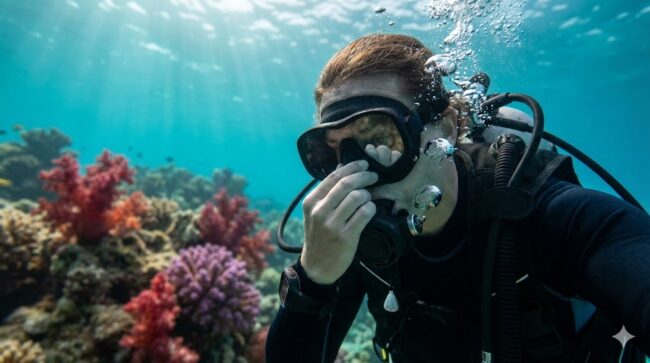
Ear trouble is the #1 enemy of a multi-day dive trip. Whether it’s a “sticky” ear or the fear of a reverse block, equalization issues can ground you. In this guide, we share 5 expert tips to keep your ears clear, including the importance of a feet-first descent, the “hydration secret,” and why the Valsalva maneuver isn’t your only option. Dive comfortably all week long with Scubadore.
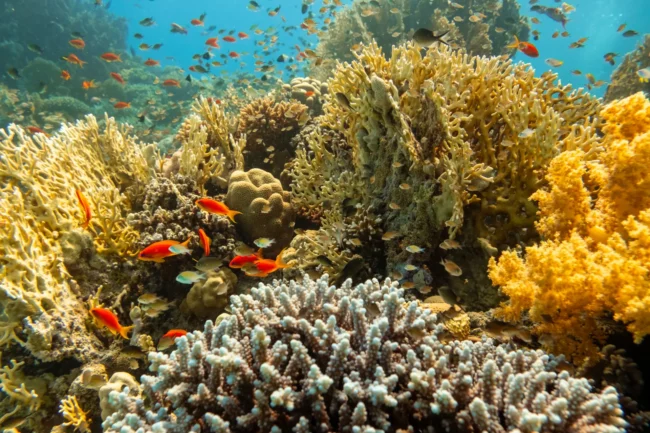
Gota Abu Ramada: Exploring “The Aquarium” – Is This the Most Photogenic Shallow Reef in the World? There are dive sites that are famous for depth, and there are sites famous for wrecks. And then, there is Gota Abu Ramada. Known affectionately by locals and repeat guests as simply “The Aquarium,” this oval-shaped reef is…
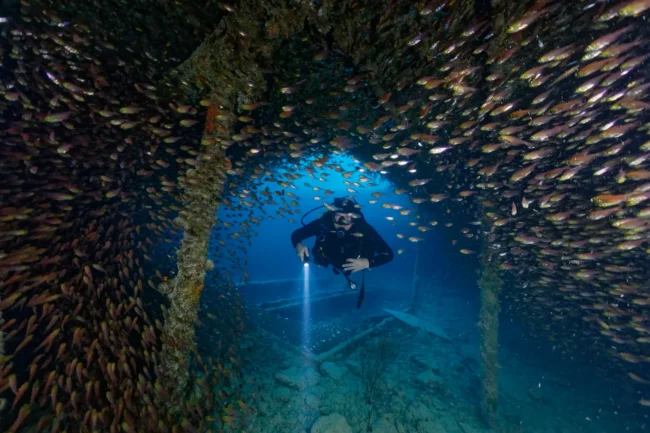
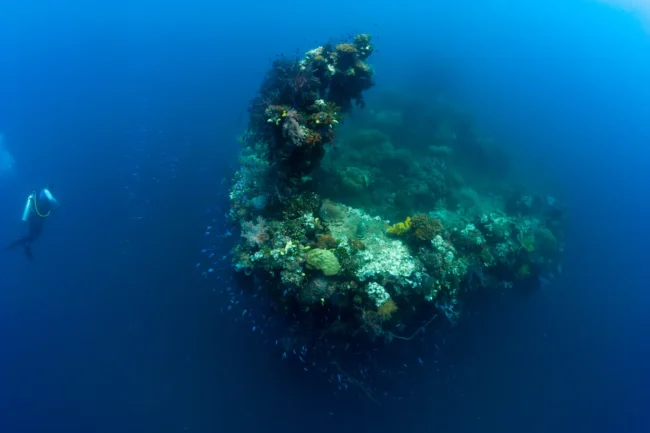
It’s the ultimate wreck diving showdown: The modern, tilted steel of the Giannis D versus the 19th-century elegance of the SS Carnatic. Located on the treacherous Abu Nuhas reef, these two ships offer wildly different experiences. Whether you love engine room penetrations or soft-coral photography, this guide compares the two legends and explains why you need to dive both on your next Hurghada trip.
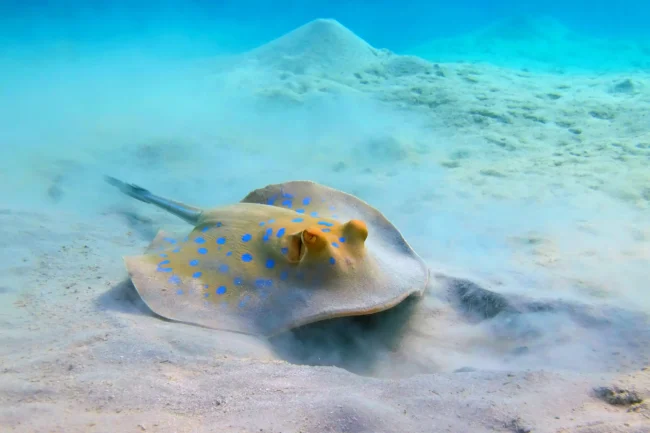
You’ve seen the flash of neon blue on the sand—now meet the owner. The Bluespotted Ribbontail Ray is one of the most beautiful and shy residents of Hurghada. In this guide, we explore the science behind their “electric” warning colors, the truth about their venomous spines, and the expert techniques you need to photograph these skittish icons without scaring them away.
Do you feel like you’re constantly fighting to stay underwater? Or maybe your dives are shorter than you’d like? The secret isn’t a bigger tank—it’s buoyancy control. In this guide, we explain how mastering Peak Performance Buoyancy (PPB) helps you use significantly less air, protects the delicate Red Sea corals, and turns you into the “Zen” diver everyone envies.
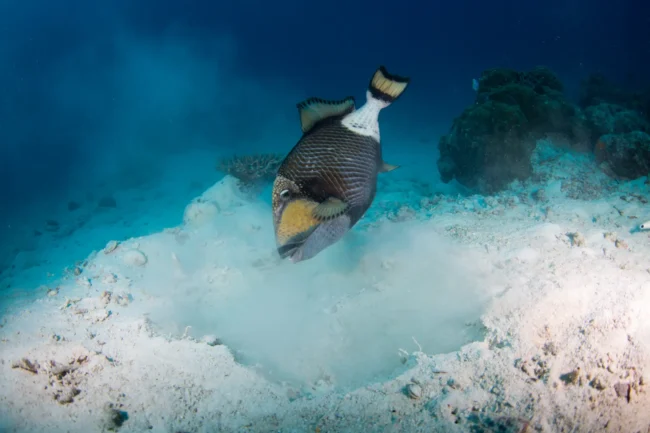
It has buck teeth, a moustache, and a bad attitude. The Titan Triggerfish is the Red Sea’s most protective parent. In this safety guide, we teach you how to spot the warning signs (the “trigger”), understand the crucial geometry of the “Cone of Danger,” and exactly what to do if you find yourself face-to-face with an angry nesting Titan. Respect the reef’s heavyweight!
We all know “Nemo,” but the real story of the Red Sea Clownfish is far more fascinating than fiction. From chemical invisibility cloaks to gender-bending hierarchies, this guide explores the complex, symbiotic world of the clownfish and the anemone. Discover why these reef roommates are the ultimate survival team and how to best observe them on your next dive in Hurghada.
Is January a good time to dive the Red Sea? Absolutely! While the water is cooler (around 22°C), the visibility is at its annual peak and the crowds are gone. This guide covers everything you need to know about diving Hurghada in January, from the active macro life to the essential thermal protection you’ll need to stay warm and comfortable on the boat and in the blue.