El Mina Wreck: A Historic Dive in the Heart of Hurghada
When divers dream of Egypt, their minds often wander to ancient wonders. But beneath the waves, just a stone’s throw from Hurghada’s main harbour, lies a different kind of monument—a tangible piece of modern history, resting in silent tribute. This is the wreck of the El Mina, an Egyptian minesweeper that serves as a powerful connection to a pivotal moment in the nation’s past.
Unlike the famous cargo wrecks that dot the Red Sea, the El Mina is a true warship, a casualty of conflict. To dive it is to experience something unique: a poignant, fascinating, and incredibly rewarding adventure that offers a different perspective on the rich history of this region.
At Scubadore Hurghada, we believe in sharing the full spectrum of the Red Sea’s underwater treasures. A trip to the El Mina is a journey that combines the thrill of wreck diving with a deep respect for the story it tells.
The Story of a Warship: A History of El Mina
 To fully appreciate this dive, one must first understand its history. The El Mina (meaning “The Harbour” in Arabic) was a 70-meter-long minesweeper in the Egyptian Navy. Its story comes to an abrupt and dramatic end during the Yom Kippur War.
On October 6, 1973, while moored in the Hurghada harbour, the El Mina was targeted by Israeli fighter jets. The attack was swift and devastating. The ship sank at its moorings, eventually settling on its port side on the seabed, where it remains today. It is not just a shipwreck; it is a genuine war grave and a memorial, demanding a thoughtful and respectful approach from all who visit.
Your Dive Briefing: Exploring the Wreck
A dive on the El Mina is a journey along the length of this fallen warship, revealing different aspects of its character and its violent end. Our dive plan is designed to explore it thoroughly and safely.
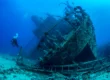
The Descent: Your dive begins with a descent through the blue water towards the Hurghada harbour entrance. As you get closer, the unmistakable silhouette of a large ship lying on its side materializes below you. The wreck starts at a depth of around 25 meters and slopes down to the sandy seabed at 32 meters.
The Stern and Propellers: We typically begin our tour at the deepest part of the wreck—the stern. Here at around 30-32 meters, you can see the ship’s propellers and rudder, a great place to appreciate the scale and power of the vessel. This vantage point gives you a clear view up the entire length of the deck.
The Blast Damage: As we move along the uppermost (starboard) side of the hull, you cannot miss the dramatic evidence of the ship’s final moments. A huge, gaping blast hole, torn open by the aerial attack, offers a poignant glimpse into the wreck’s interior. It is a powerful reminder of the destructive force that sent this vessel to the seafloor.
The Superstructure and Bridge: Continuing towards the bow, we explore the ship’s superstructure. The bridge area is a highlight for many divers. Over the decades, it has become completely filled with a shimmering, pulsating cloud of Glassfish. Pushing gently through this living curtain to peer inside is a truly magical experience.
The Bow and Armaments: The bow section is home to some of the ship’s most recognizable features, including deck winches and, most notably, the forward anti-aircraft gun, still pointing skyward as if in a final act of defiance. This area provides fantastic photo opportunities and a real sense of the ship’s purpose as a military vessel.
Due to the wreck’s age, condition, and the tight spaces within, penetration of the El Mina is not recommended. Our focus is on a safe and comprehensive exploration of the exterior, which holds more than enough fascinating details to fill a dive.
From Warship to Thriving Artificial Reef
Time and the sea have transformed this instrument of war into a vibrant oasis of life. The El Mina is a classic example of how nature reclaims and repurposes, turning a man-made tragedy into a thriving ecosystem.
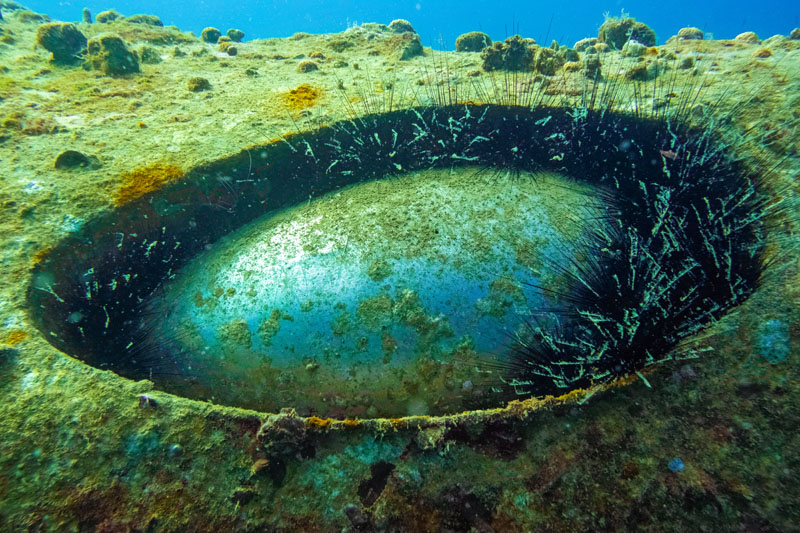
The wreck is now heavily encrusted with corals and sponges. Besides the mesmerizing cloud of Glassfish in the bridge, the ship provides a home for a host of other creatures. Look closely on the hull and you might find well-camouflaged Scorpionfish and Stonefish. Lionfish hunt along the decks, and keen-eyed divers can spot colourful Nudibranchs making their way slowly across the metalwork. Schools of Bannerfish and Fusiliers often patrol the waters around the wreck, adding movement and colour to this historical scene.
Often, a dive on the El Mina is paired with a look at a second, smaller wreck nearby—a sunken fishing trawler that also hosts an interesting array of Red Sea marine life.
A Dive for the Advanced Adventurer
The El Mina is a deep dive, with its most interesting features resting between 25 and 32 meters. For this reason, it is essential that divers be PADI Advanced Open Water certified (or hold an equivalent rating). This certification ensures you have the training and experience to comfortably and safely manage a dive to these depths.
The PADI Wreck Diver specialty course is also an excellent way to prepare for dives like this, teaching you specific skills for observing and navigating shipwrecks safely.
The Scubadore Hurghada Approach
Diving a wreck like El Mina requires a level of precision and respect that is best achieved in a small group. Our approach ensures:
- A Detailed, Historical Briefing: We believe in telling the story of the wreck, so you understand the significance of what you are seeing.
- Expert Guidance: Our guides know every corner of the El Mina, pointing out both the key historical features and the cryptic marine life you might otherwise miss.
- Safety and Control: A small group minimizes the risk of kicking up silt, ensuring better visibility for everyone and a more enjoyable dive.
The El Mina offers a profound and unique diving experience, a departure from the purely natural reefs. It’s a chance to touch modern history, witness the power of nature’s reclamation, and pay silent respect to a piece of Egypt’s past. Contact us to arrange your dive to this fascinating underwater monument.