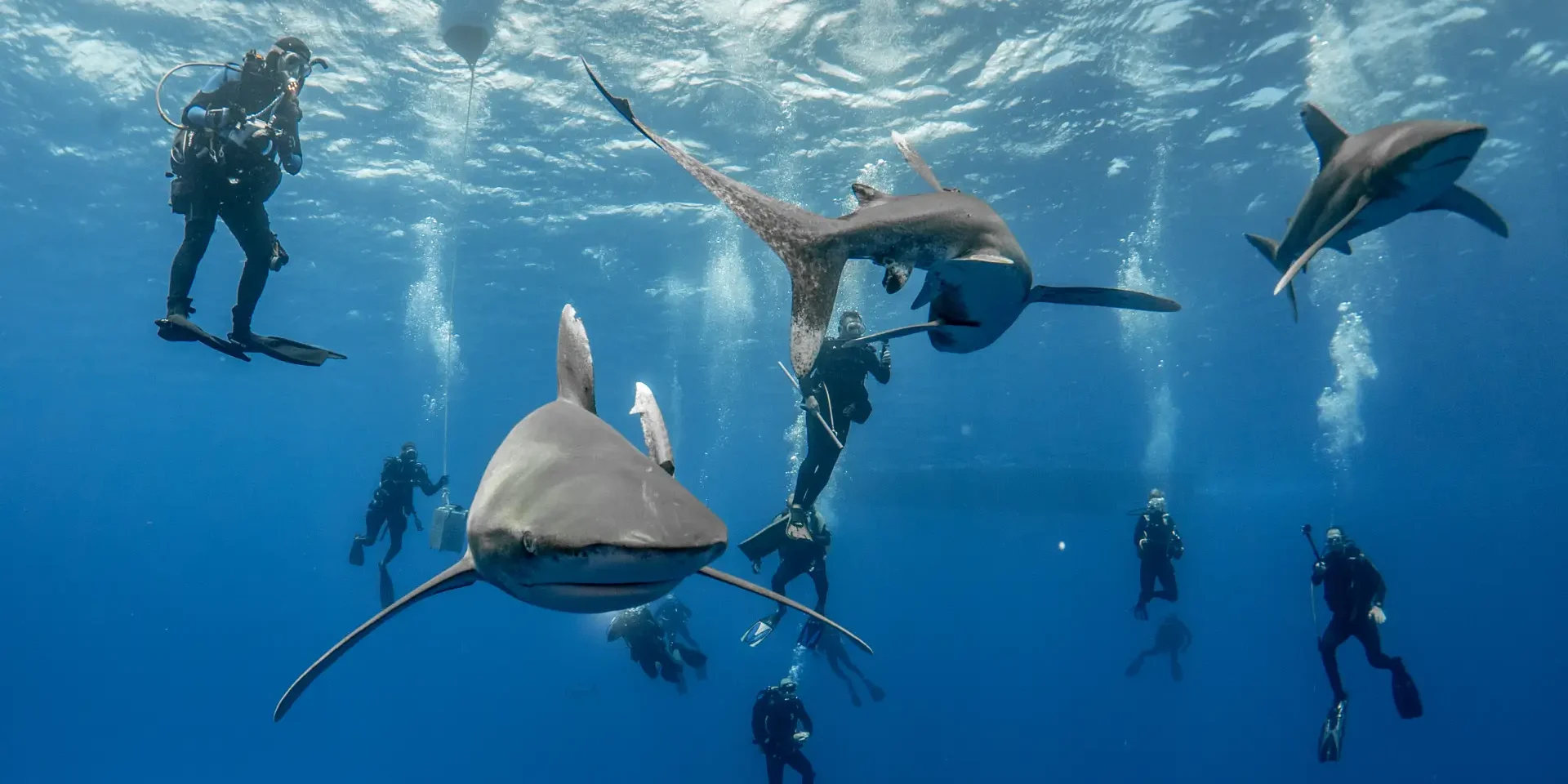
The Red Sea’s Most Impressive Predators: Sharks Seen Around Hurghada
For many divers, the ultimate underwater thrill isn’t finding a tiny nudibranch or exploring a sunken wreck—it’s locking eyes with an apex predator. Sharks command a level of respect and awe that no other marine animal can match.
However, popular culture has given sharks an unfair reputation. If you are planning a trip to the Red Sea, you might be wondering if you need to be looking over your shoulder on every dive. The reality is quite the opposite. In the diving community, seeing a shark isn’t a cause for panic; it is a highly sought-after privilege.
At Scubadore Hurghada, we consider every shark encounter a gift. These magnificent creatures are a sign of a healthy, thriving marine ecosystem. If you are hoping to add a shark to your dive log, here is your guide to the species you might encounter, where to find them, and how the reality of “rare sightings” actually works.
The Reality Check: How Rare Are Sightings?
Before we dive into the species, let’s set expectations. If you are doing your Open Water course on a shallow, coastal reef just off the Hurghada mainland, your chance of seeing a shark is incredibly low.
Coastal vs. Offshore: Most sharks in the Red Sea are pelagic (open ocean) or prefer deep, offshore drop-offs with strong currents. They do not frequent the busy, shallow tourist reefs.
The Luck Factor: Even at the famous “shark sites,” there are no guarantees. Sharks are constantly on the move, patrolling vast territories.
The Reward: Because they are elusive, a sighting is never taken for granted. It requires diving the right sites, in the right season, with a healthy dose of luck.
When you do venture to the offshore reefs, here are the three impressive predators you might just be lucky enough to meet.
1. The Grey Reef Shark: The Agile Patroller
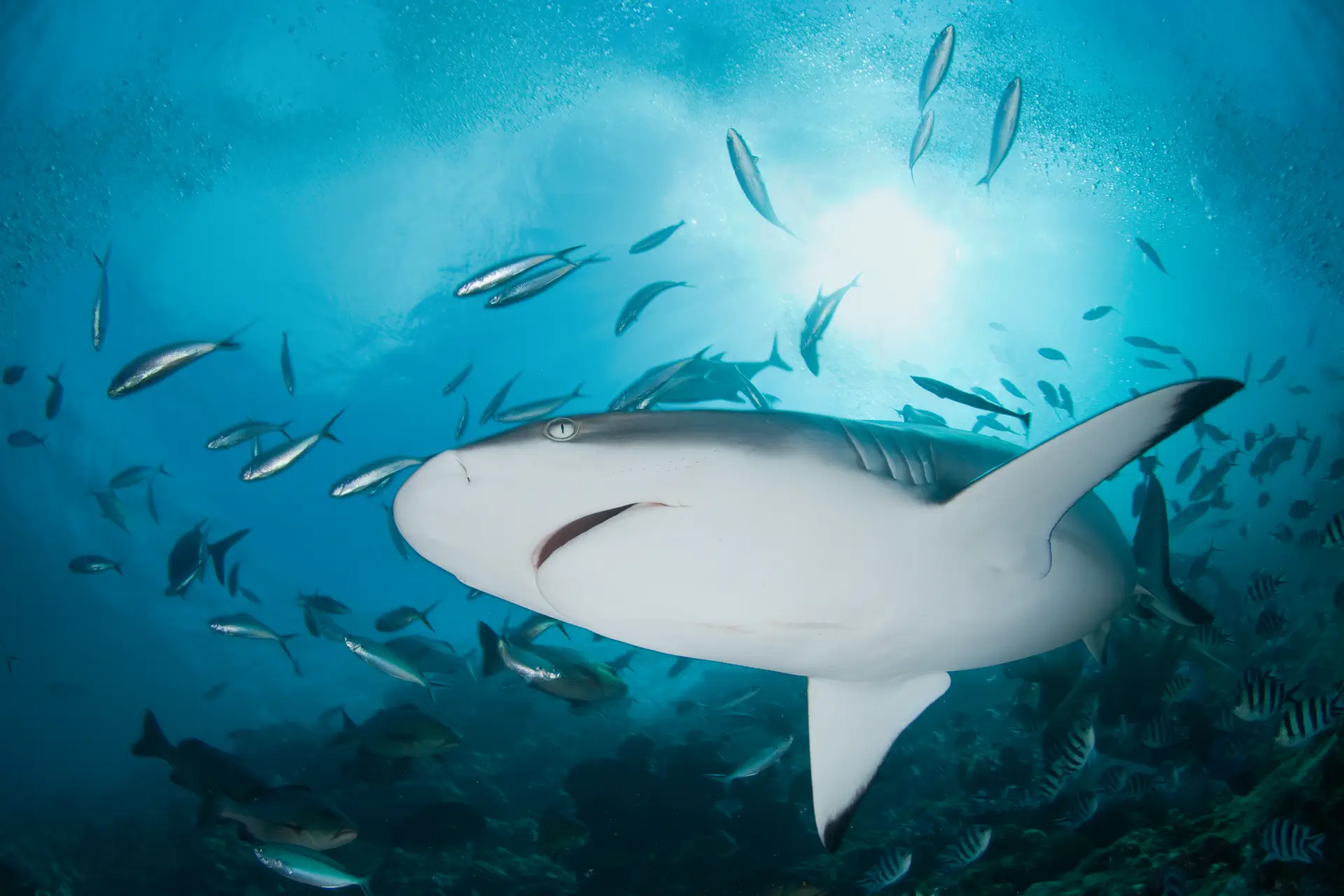 If you are going to see a shark on a standard outer-reef dive from Hurghada, the Grey Reef Shark (Carcharhinus amblyrhynchos) is the most likely candidate.
The Look: They are the classic “textbook” shark. Medium-sized (usually around 1.5 to 2 meters), with a sleek grey body, a blunt snout, and a distinct dark margin along the trailing edge of their tail fin.
The Behavior: Grey Reef Sharks are territorial and highly curious, but also cautious. You will often see them cruising purposefully along the edge of a drop-off, investigating the area before disappearing back into the blue.
Where to Spot Them: They favour the outer edges of reefs where the current runs strong, such as the drop-offs at Careless Reef or the deeper sections of Abu Nuhas.
2. The Oceanic Whitetip (Longimanus): The Bold Nomad
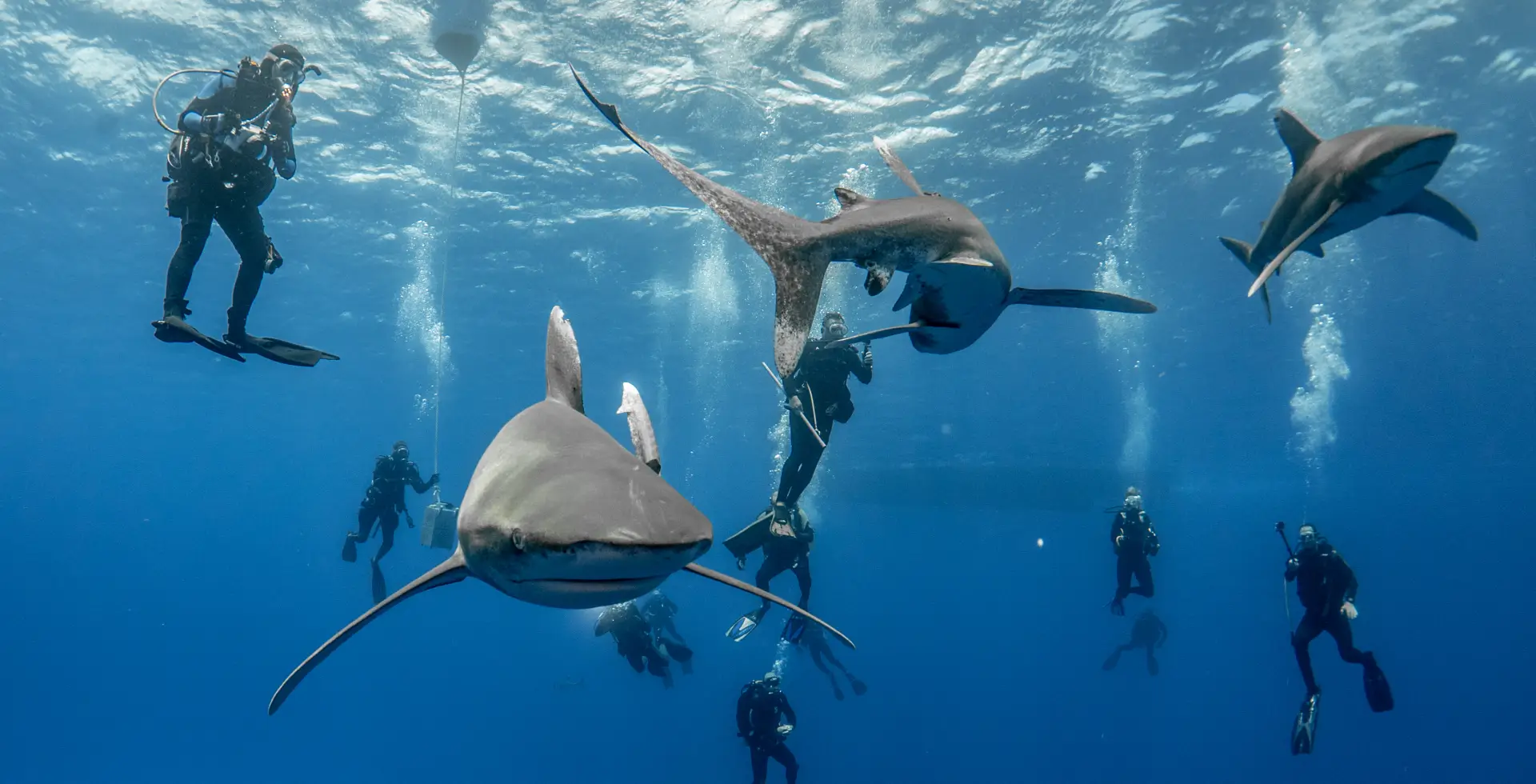 The Oceanic Whitetip (Carcharhinus longimanus) is a legend of the Red Sea. While critically endangered globally, the Egyptian Red Sea remains one of the few places on Earth where you can still reliably encounter them.
The Look: Unmistakable. They have a stocky build and incredibly long, rounded pectoral and dorsal fins capped with striking white tips.
The Behavior: Unlike the shy Grey Reef Shark, the Oceanic Whitetip is bold, inquisitive, and completely fearless. Because they live in the barren open ocean, they are opportunistic and will often approach divers very closely to investigate.
Where to Spot Them: They are pelagic wanderers. To see them, you generally need to book a trip to the offshore marine parks like the Brothers Islands or Elphinstone. They are most frequently spotted in the autumn and early winter months (October to December) cruising just below the surface.
 3. The Scalloped Hammerhead: The Deep-Water Enigma
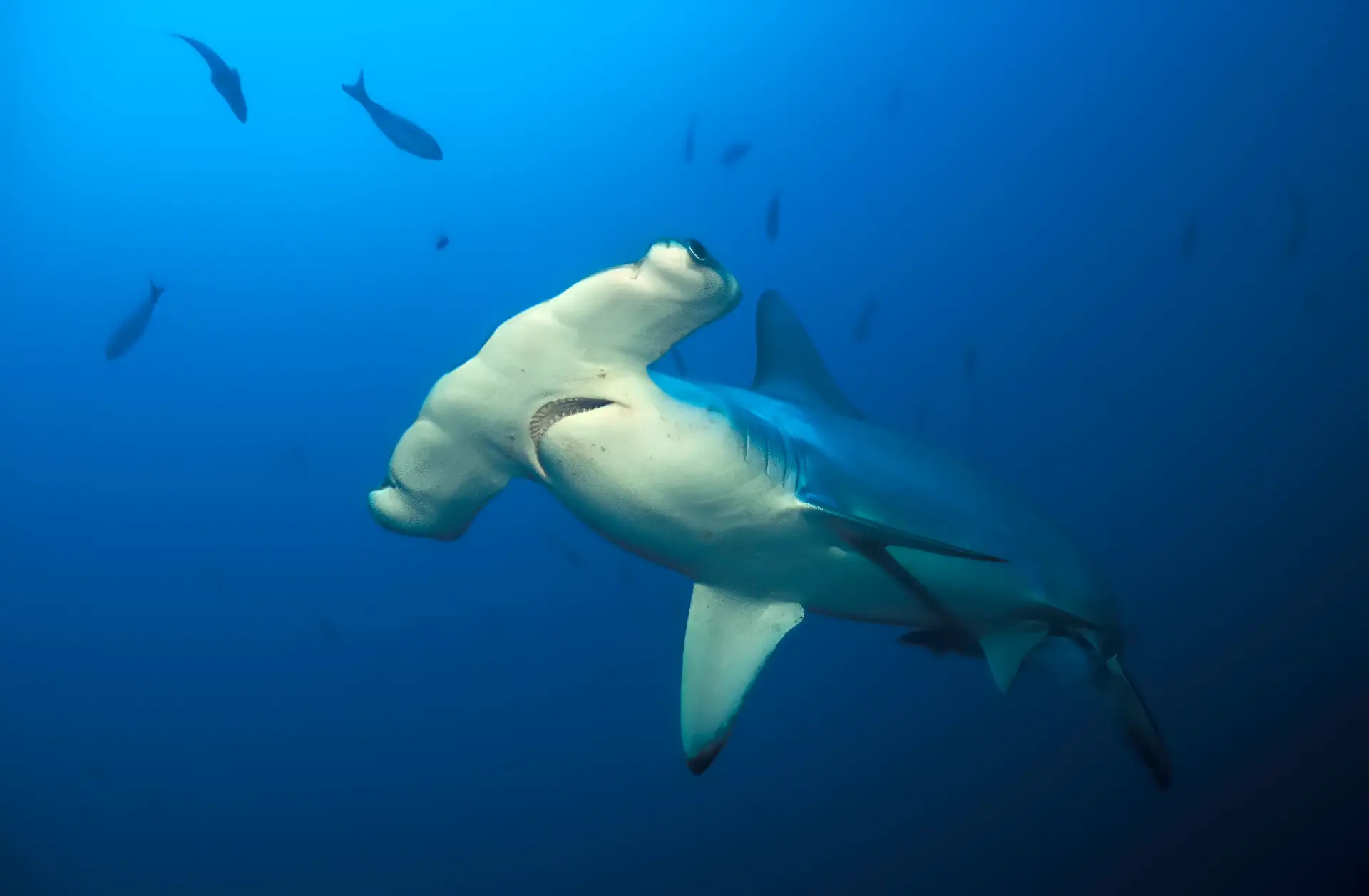
For many, this is the holy grail of Red Sea shark diving. The Scalloped Hammerhead (Sphyrna lewini) is a bizarre, beautiful, and deeply fascinating creature.
The Look: Easily identified by their wide, flattened “hammer” head (the cephalofoil), which houses advanced electro-receptors that allow them to scan the sand for hidden prey.
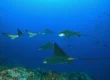
The Behavior: While solitary hammerheads are occasionally seen, the real prize is witnessing a school of them out in the blue. They are generally shy around divers and easily spooked by noisy bubbles or erratic movements.
Where to Spot Them: Hammerheads love deep, cool water and strong currents. Offshore sea mounts like the Brothers Islands or Daedalus Reef (further south) are the hotspots. Summer (May through August) offers the best chance of encountering schooling hammerheads as they gather in the thermoclines.
How to Dive with Sharks Safely (The Scubadore Way)
Encountering a shark is exhilarating, but it requires strict discipline and respect for the animal. When our guides spot a shark, we follow strict protocols to ensure the safety of both the divers and the predator:
Stay Calm and Breathe: Rapid, excited breathing creates a wall of noisy bubbles that will instantly scare off a Hammerhead or Grey Reef Shark. Master your buoyancy and breathe slowly.
Do Not Chase: A swimming diver looks like a clumsy predator. If you swim toward a shark, it will leave. Hold your position, stay close to the reef wall, and let the shark dictate the distance.
Keep Eye Contact: If an inquisitive Oceanic Whitetip approaches, stay vertical, keep your eyes on the shark, and remain together as a group. They respect confident body language.
The Small Group Advantage: This is where Scubadore shines. A massive group of 15 divers splashing in the water will ruin a shark encounter before it begins. Our private and semi-private groups ensure a quiet, low-impact presence in the water, drastically increasing your chances of a close, natural observation.
Sharks are the vital, beating heart of the ocean’s ecosystem. If you have the experience and the desire to see them, let us help you plan an offshore expedition. It is an encounter that will change the way you view the ocean forever.